Lamb Meat Price in Egypt: Cost per Kilo in 2026
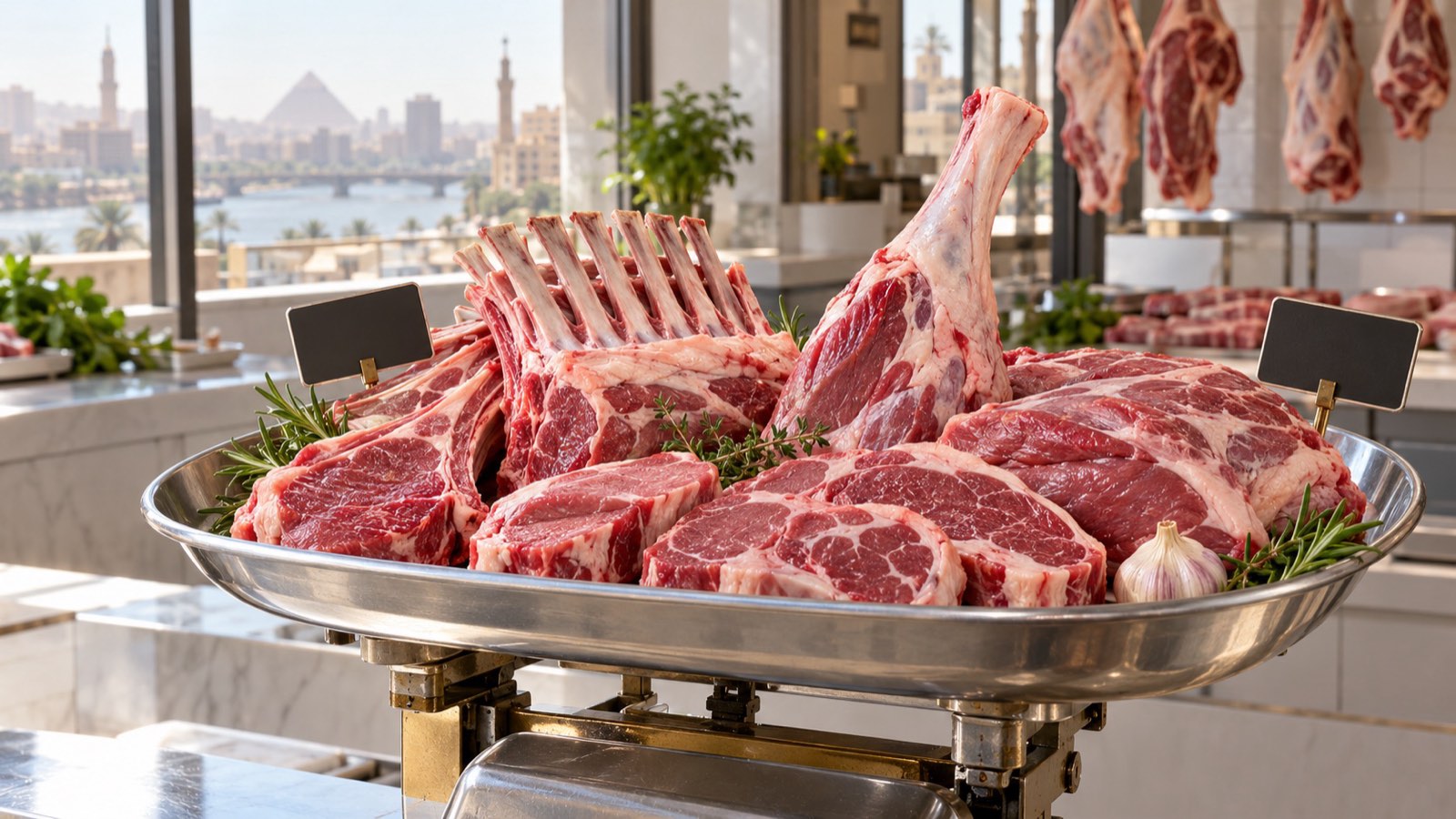
Lamb meat price in Egypt averaged 474 EGP per kilo for boneless cuts on 14 October 2026, according to the Cabinet's price portal as reported by the Banker news site. Shops quoted 350 to 660 EGP, so the cut, the bone and the butcher matter more than the headline average.
Anyone buying boneless lamb in Egypt this month meets a very wide spread. The Cabinet's Information and Decision Support Center (IDSC) publishes daily averages, and its 14 October 2026 reading, as reported by the Banker news site, was 474 EGP per kilo, down 17 EGP. Shop prices that day ran from 350 to 660 EGP.
Lamb meat price in Egypt today: the October 2026 numbers
Lamb is the most expensive red meat on the portal right now. The table below uses the 14 October 2026 reading for every row except bone-in lamb, which comes from the 19 August 2026 bulletin. Read each figure as a national average, not a quote from one shop, and not a Cairo-only price.
| Cut | Average per kilo (EGP) | Range seen (EGP) | Reading date |
|---|---|---|---|
| Boneless lamb (dani) | 474 | 350 to 660 | 14 Oct 2026 |
| Boneless veal (butaylu) | 464 | - | 14 Oct 2026 |
| Beef, young (kandouz) | 443 | - | 14 Oct 2026 |
| Beef, medium age | 442 | - | 14 Oct 2026 |
| Beef, older animal | 376 | - | 14 Oct 2026 |
| Bone-in lamb | 405 | 200 to 500 | 19 Aug 2026 |
A dash means this article gives no range for that cut. Boneless lamb sits 10 EGP above veal and 31 to 32 EGP above medium-age and young beef. Older beef at 376 EGP is almost 100 EGP cheaper per kilo, so the lamb vs beef price gap depends heavily on which beef you compare it with.
How the lamb price per kilo moved from May to October 2026
Four readings of the same portal put retail lamb in a narrow band between May and October 2026. It was about 477 EGP on 2 May, 468 EGP on 4 May, 470 EGP for boneless on 19 August and 474 EGP for boneless on 14 October. The May bulletins do not name the cut, so the comparison is indicative, but they came just ahead of Eid al-Adha and sit within 6 EGP of today's boneless average.
Wider inflation is the backdrop. CAPMAS put annual headline inflation at 12.8 percent in September 2026, while its meat and poultry index was up 6.2 percent on September 2025 and 2.5 percent on the month. Separately, the IDSC had beef at 447.8 EGP per kilo on 16 June 2026, up 17.7 percent year on year; that is a beef-only reading from a different date, so it is not directly comparable with the meat and poultry index.
Price drivers: what affects the price of lamb per kilo
The same day can show a 310 EGP gap for the same cut. Four things are worth checking when you compare quotes:
- Bone-in or boneless. Bone-in lamb averaged 405 EGP against 470 EGP for boneless on 19 August 2026, a gap of about 65 EGP per kilo. The bone is part of the weight, so compare what ends up on the plate, not the sticker.
- Where you shop. Ahram Online found in May 2023 that a government-linked Aman outlet priced meat at 270 EGP per kilo against 360 EGP at a nearby butcher. Those figures are old, but the gap between outlet types is the point.
- Imported meat. Cairo Governorate says imported meat is inspected by the Agriculture and Health ministries and a shipment is rejected if any sample tests positive. That page describes safety checks, not prices.
- Supply. In August 2024 importers said Egypt would bring in 15,000 to 25,000 sheep and goats a month to cover a production shortfall of at least 30 percent.
Cheaper alternatives to boneless lamb
Anyone cutting the bill has three cheaper swaps on the October 2026 reading: boneless veal at 464 EGP, medium-age beef at 442 EGP and older beef at 376 EGP. Moving 2 kg a week from boneless lamb to older beef saves about 196 EGP, while the same swap to veal saves 20 EGP. Bone-in lamb is the other route, at about 65 EGP less per kilo than boneless in the August bulletin, before you account for the bone. If you switch to beef, grass fed vs grain fed beef in Egypt compares the two feeding styles, and for poultry instead of red meat see organic chicken in Egypt.
Live-weight price versus shop price
A live-weight (qa'im) figure is not comparable with a shop price. On 4 May 2026 the portal listed live sheep and goat at about 220 EGP per kilo, cattle at 190 to 200 and buffalo at 160 to 170. Live weight includes bone, hide and offal, while the 468 EGP shop price that day was for meat sold over the counter.
English-language price pages often mix live-weight and retail figures, so always check which basis a number uses. In June 2024 Egyptian Streets reported live sheep at 10,000 to 15,000 EGP for an animal of about 60 kg, and sheep meat at 160 to 220 EGP per kilo. At the May 2026 live price of 220 EGP per kilo, a 60 kg animal would come to 13,200 EGP, inside that range. The two figures are two years apart, so this is an inference rather than proof, but it suggests the 2024 per-kilo range described whole animals and not butcher cuts.
What a lamb order costs: 1 kg, a week and a month
Simple arithmetic on the October average turns the per-kilo price into a household budget:
- 1 kg of boneless lamb: 474 EGP (350 to 660 EGP across shops).
- 2 kg a week: about 948 EGP, or 700 to 1,320 EGP across shops.
- 8 kg a month: about 3,792 EGP, or 2,800 to 5,280 EGP across shops.
A whole animal bought live is priced by live weight, as the section above shows. Ask which weight a quoted price refers to, because live-weight and shop prices differ.
How to check today's price and get a fair quote
The official place to check a daily average is the Market Trends section of the IDSC app, which lists local commodity prices including meat and poultry. Check it on the day you order, because averages move by a few EGP between readings and shops can sit far from them.
When you ask a butcher or a delivery service for a quote, ask for these three things:
- The cut by name, and whether it is bone-in or boneless.
- The price per kilo before trimming.
- The weight the price refers to.
A delivered kilo is priced by the supplier, so there is no portal average for it. Set the per-kilo quote against the 474 EGP boneless average above and compare it with the IDSC figure for the same cut and date.
Frequently asked questions
How much is a kilo of lamb in Egypt today?
On 14 October 2026 the IDSC portal average for boneless lamb was 474 EGP per kilo, with shop prices from 350 to 660 EGP. Bone-in lamb averaged 405 EGP in the 19 August 2026 bulletin. Prices differ by butcher and district, so check the IDSC app on the day you order.
Is lamb more expensive than beef in Egypt?
Yes, on the October 2026 portal reading. Boneless lamb averaged 474 EGP per kilo against 442 to 443 EGP for medium-age and young beef and 376 EGP for older beef. Boneless veal was close at 464 EGP, so lamb is currently the priciest of those readings.
What is the difference between boneless and bone-in lamb prices?
Bone-in lamb is cheaper per kilo: about 405 EGP against 470 EGP for boneless in the 19 August 2026 bulletin, a gap of roughly 65 EGP. You also pay for the bone's weight, so the real saving is smaller than the sticker suggests.
Why did meat prices go up in Egypt?
CAPMAS put annual headline inflation at 12.8 percent in September 2026 and meat and poultry up 6.2 percent on the year. Supply also plays a part: in August 2024 importers cited a production shortfall of at least 30 percent for sheep and goats, covered partly by imports.
Where can I check official lamb prices?
The Cabinet's IDSC publishes local commodity prices, including meat and poultry, in the Market Trends section of its app. News sites often repeat that bulletin, but the app is the primary source. Note whether a price is for boneless or bone-in lamb, and whether it is a live-weight figure.
Next step: get a quote for your cut
Prices change by the week, so the most useful number is a quote for your exact cut, weight and district. Contact us with the cut, whether it is bone-in or boneless, and the amount you need in Cairo, then compare the answer with the 474 EGP boneless and 405 EGP bone-in averages above.
Frequently asked questions
How much is a kilo of lamb in Egypt today?
On 14 October 2026 the IDSC portal average for boneless lamb was 474 EGP per kilo, with shop prices from 350 to 660 EGP. Bone-in lamb averaged 405 EGP in the 19 August 2026 bulletin. Prices differ by butcher and district, so check the IDSC app on the day you order.
Is lamb more expensive than beef in Egypt?
Yes, on the October 2026 portal reading. Boneless lamb averaged 474 EGP per kilo against 442 to 443 EGP for medium-age and young beef and 376 EGP for older beef. Boneless veal was close at 464 EGP, so lamb is currently the priciest of those readings.
What is the difference between boneless and bone-in lamb prices?
Bone-in lamb is cheaper per kilo: about 405 EGP against 470 EGP for boneless in the 19 August 2026 bulletin, a gap of roughly 65 EGP. You also pay for the bone's weight, so the real saving is smaller than the sticker suggests.
Why did meat prices go up in Egypt?
CAPMAS put annual headline inflation at 12.8 percent in September 2026 and meat and poultry up 6.2 percent on the year. Supply also plays a part: in August 2024 importers cited a production shortfall of at least 30 percent for sheep and goats, covered partly by imports.
Where can I check official lamb prices?
The Cabinet's IDSC publishes local commodity prices, including meat and poultry, in the Market Trends section of its app. News sites often repeat that bulletin, but the app is the primary source. Note whether a price is for boneless or bone-in lamb, and whether it is a live-weight figure.