Grass Fed vs Grain Fed Beef in Egypt: Which Should You Buy?
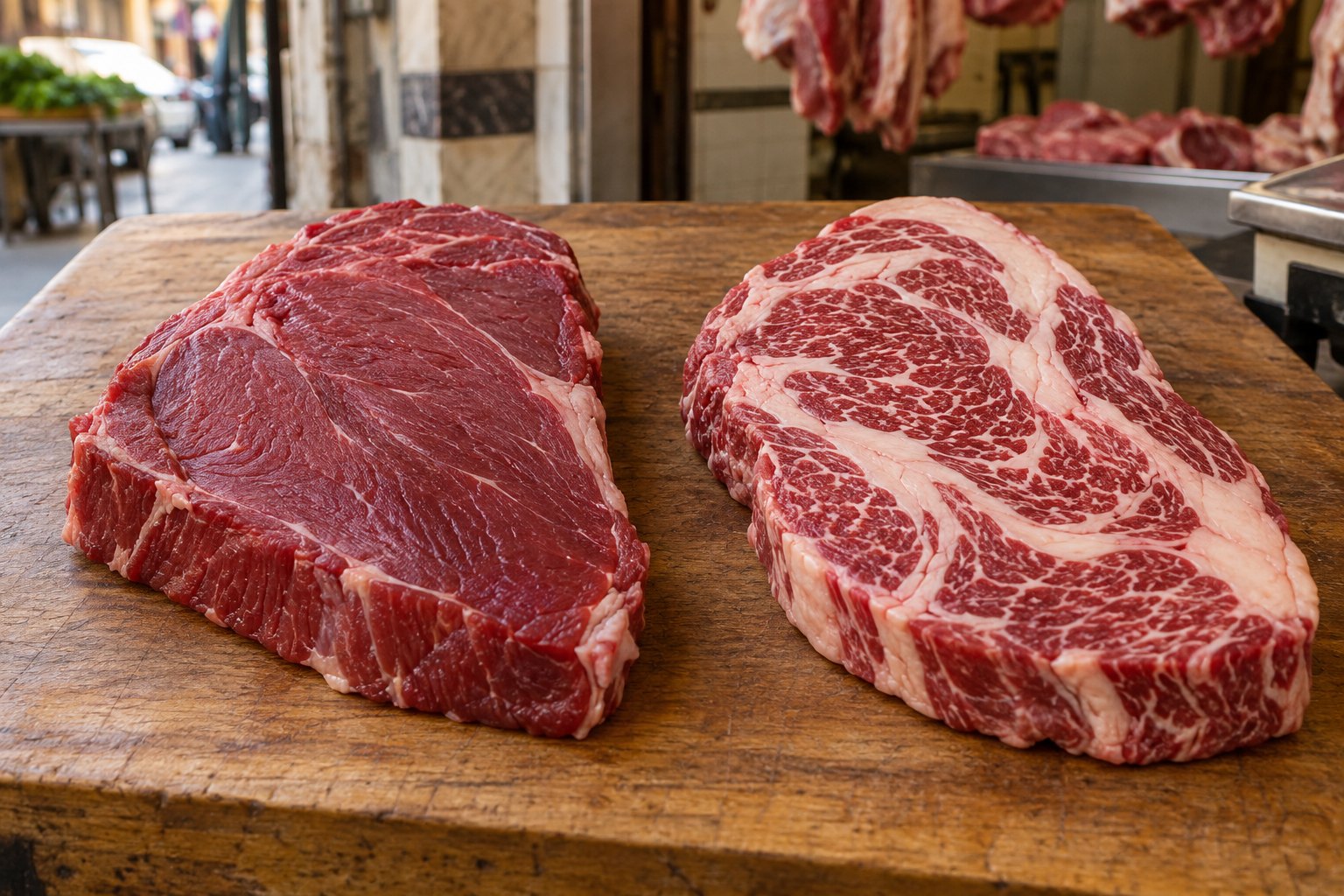
Grass fed vs grain fed beef in Egypt is now a genuine buying decision for Cairo households: specialist suppliers deliver grass-fed cuts to Zamalek, New Cairo and Sheikh Zayed at up to LE 1,000 per 600 g fillet. With retail beef prices having more than doubled between 2022 and 2023, the premium needs a clear explanation.
Cairo consumers face a real price decision when choosing between grass fed and grain fed beef. Retail beef prices in Egypt more than doubled between 2022 and 2023, according to the USDA Foreign Agricultural Service, and specialist grass-fed cuts cost far more again: Moomoo's EG lists a 600 g grass-fed fillet at LE 1,000 on its website (checked September 2026). This guide breaks down the nutrition, taste, price, and local availability so you can decide which option fits your kitchen and budget.
Grass Fed vs Grain Fed Beef: What's the Difference?
Grass-fed cattle spend most of their lives grazing on pasture, eating grasses and forage. Grain-fed cattle — also called conventionally raised or grain-finished — are fed a diet of corn or soy in their final months, a phase that accelerates weight gain and increases intramuscular fat.
The feed difference shapes the meat you buy. Grain finishing raises marbling and intramuscular fat, giving a juicier texture, as a peer-reviewed review in Nutrition Journal sets out (PMC, 2010). Grass-fed beef is leaner by comparison and has a more pronounced flavour of its own.
Nutrition: How Grass Fed Meat Compares to Grain Fed
One of the most cited differences in any omega-3 beef comparison is fatty acid content. Grass-fed beef carries substantially more omega-3 fatty acids than grain-fed beef — the omega-6 to omega-3 ratio averages 1.53 for grass-fed versus 7.65 for grain-fed, a near five-fold difference with relevance to cardiovascular health markers (PMC, 2010).
The advantages extend further. Conjugated linoleic acid (CLA) is 2–3 times higher in grass-fed ruminants than grain-fed animals, per the same review. Beta-carotene runs roughly 7 times higher in grass-fed beef (0.45 μg/g versus 0.06 μg/g), and Vitamin E is also substantially elevated — 2.1 to 7.73 μg/g in grass-fed tissue compared to 0.75–2.92 μg/g in grain-fed.
Grass-fed beef is leaner overall — lower in total fat than grain-fed counterparts, which means fewer calories per serving but also less marbling. The review also notes that people who eat fattier grain-fed portions can reach similar omega-3 and CLA intakes, so the gap is about fat quality per gram rather than a nutrient you cannot get elsewhere.
Taste, Texture, and Cooking in Cairo Kitchens
Grass-fed beef has what the Nutrition Journal review calls a distinct grass flavour, and trained taste panels in the studies it covers often rated grain-fed beef higher for flavour and tenderness (PMC, 2010). Grain-fed beef is milder and sweeter, while many Egyptian cooks will recognise the stronger taste from quality baladi beef.
Cooking grass-fed beef in traditional Egyptian dishes requires minor adjustment. Because it is leaner, cuts overcook faster — for kofta or hawawshi, a tablespoon of olive oil or a small addition of lamb fat compensates for the lower fat content. For slow-cooked tagines, the lean profile is an advantage: the meat holds its texture and absorbs spices cleanly without releasing excess grease.
Price Table: Grass Fed vs Grain Fed Beef in Egypt
Egypt produces only about 35 percent of its own animal feed, and rising feed costs have squeezed local cattle producers. The USDA Foreign Agricultural Service reported that average retail beef prices more than doubled between 2022 and 2023. That year, subsidised imported beef sold for EGP 260 per kilogram at Ministry of Supply outlets (USDA FAS, 2023).
The premium for specialist grass-fed beef in Egypt is steep. Supplier prices below are as listed on each company's own website, checked September 2026:
| Product | Supplier | Price |
|---|---|---|
| Grass-fed fillet steak (600g) | Moomoo's EG | LE 1,000 |
| Grass-fed whole tenderloin (≈1.5kg) | Moomoo's EG | LE 2,015–2,860 |
| Grass-fed minced meat (450g) | Moomoo's EG | LE 230 |
| Grass-fed burgers (400g) | Moomoo's EG | LE 200 |
| Rib-eye steak | Radi Farms | EGP 600 |
| Tenderloin | Radi Farms | EGP 850–1,050 |
| Subsidised imported beef (per kg) | Ministry of Supply outlets (2023, USDA FAS) | EGP 260 |
Where to Buy Grass Fed Beef in Cairo
Two specialist suppliers are prominent for grass-fed beef Cairo delivery. Moomoo's EG states on its website that its grass-fed range uses cattle 12 months or older, sourced via Emkay Foods, with cuts drawn from South African Angus, Dutch Veal, Australian Lamb, and Egyptian Baladi Beef. Its listed delivery zone covers Sheikh Zayed, 6 October, New Cairo, Rehab, New Giza/Palm Hills, Zamalek, Dokki, Mohandeseen, Agouza, and Garden City.
Radi Farms is a second premium Cairo option, listing rib-eye steak at 600 EGP and tenderloin at 850–1,050 EGP per unit on its website. No breed or origin information was published there when checked. Neither supplier lists independent certification for its grass-fed labelling, which is worth noting when evaluating premium pricing claims.
Lahmetna also delivers farm-labelled grass-fed cuts from Egyptian open-pasture farms across Cairo. See the range on our grass fed beef in Egypt page.
Is Egyptian Baladi Beef Grass Fed?
Baladi beef Egypt — Egypt's traditional, locally raised cattle — is typically raised on forage and crop residues rather than grain, meaning it shares characteristics with grass-fed meat: leaner muscle and a more pronounced flavor, without the heavy marbling found in grain-finished imports.
However, "baladi" is not a certified or regulated category, and farming practices vary across regions and seasons. Egypt imports most of its animal feed, and rising grain and feed prices hit local cattle producers hard in 2023 (USDA FAS, 2023), which suggests that many local herds are grain-supplemented in practice. Moomoo's EG says its imported grass-fed range comes from cattle 12 months or older through a partnership with Emkay Foods — a level of traceability that baladi labelling does not guarantee.
For help checking labels and certificates before you buy, read our guide on how to buy fresh organic meat in Cairo.
Verdict: Grass Fed vs Grain Fed Beef in Egypt
| Feature | Grass Fed | Grain Fed |
|---|---|---|
| Omega-3 fatty acids | ~5× better ratio | Lower |
| CLA content | 2–3× higher | Lower |
| Beta-carotene | ~7× higher | Lower |
| Total fat / marbling | Leaner | Higher marbling, juicier |
| Flavor | Distinct, grassy, beefy | Milder; often rated higher by taste panels |
| Cairo price | LE 1,000 per 600g fillet (Moomoo's EG, Sep 2026) | Far lower; subsidised imports EGP 260/kg (2023) |
| Availability | Specialist suppliers only | Widely available |
| Cooking forgiveness | Less (lean cooks fast) | More forgiving |
Grain-fed beef wins on price, availability, cooking ease and, for many tasters, tenderness — it remains the practical everyday choice for most Cairo households on a budget. Grass-fed beef leads on nutritional markers and suits buyers prioritising omega-3 intake, CLA, or a leaner diet. If you buy grass-fed, choose a supplier that names the farm or origin of every cut.
Frequently Asked Questions
Is grass-fed beef available for home delivery in Cairo?
Yes. Moomoo's EG lists delivery to at least 10 Cairo areas including Sheikh Zayed, New Cairo, Rehab, Zamalek, Dokki, and Garden City. Radi Farms is a second premium option, and Lahmetna delivers farm-labelled grass-fed cuts across Cairo. Coverage varies by supplier, so confirm your specific address before ordering.
Is grass-fed beef actually healthier than regular grain-fed beef?
Grass-fed beef contains more omega-3 fatty acids, CLA, beta-carotene, and Vitamin E than grain-fed beef, based on peer-reviewed research. It is also leaner. Whether that difference is meaningful for your health depends on your overall diet and how often you eat beef. Consult a registered dietitian for personalised guidance.
Why is grass-fed beef more expensive in Egypt?
Grass-fed production takes longer because cattle are not grain-finished to accelerate weight gain. Specialist suppliers also source imported breeds rather than cheaper local supply. On top of that, retail beef prices in Egypt more than doubled between 2022 and 2023, according to the USDA Foreign Agricultural Service, which pushes premium cuts even higher.
What does grass-fed beef taste like compared to grain-fed?
Grass-fed beef has a distinct, grassy and intensely beefy flavour. Grain-fed beef is milder and sweeter because grain finishing adds marbling and intramuscular fat, and trained taste panels often rate it higher for tenderness. Many Egyptian cooks find grass-fed beef close to the quality baladi beef they already know.
Is Egyptian baladi beef the same as grass-fed beef?
Baladi beef shares some characteristics — forage-raised and typically leaner than grain-finished imports. It is not a certified grass-fed product, however, and farming practices vary. Moomoo's EG says its imported grass-fed range uses cattle 12 months or older, sourced via an established import partnership — a level of traceability that baladi labelling does not guarantee.
Your Next Step
Whether you choose grass-fed or grain-fed beef depends on your priorities: nutritional profile and flavour intensity, or price and cooking ease. For fresh premium beef delivered to your Cairo address, Contact us at Lahmetna to find out what is available this week.
Frequently asked questions
Is grass-fed beef available for home delivery in Cairo?
Yes. Moomoo's EG lists delivery to at least 10 Cairo areas including Sheikh Zayed, New Cairo, Rehab, Zamalek, Dokki, and Garden City. Radi Farms is a second premium option, and Lahmetna delivers farm-labelled grass-fed cuts across Cairo. Coverage varies by supplier, so confirm your specific address before ordering.
Is grass-fed beef actually healthier than regular grain-fed beef?
Grass-fed beef contains more omega-3 fatty acids, CLA, beta-carotene, and Vitamin E than grain-fed beef, based on peer-reviewed research. It is also leaner. Whether that difference is meaningful for your health depends on your overall diet and how often you eat beef. Consult a registered dietitian for personalised guidance.
Why is grass-fed beef more expensive in Egypt?
Grass-fed production takes longer because cattle are not grain-finished to accelerate weight gain. Specialist suppliers also source imported breeds rather than cheaper local supply. On top of that, retail beef prices in Egypt more than doubled between 2022 and 2023, according to the USDA Foreign Agricultural Service, which pushes premium cuts even higher.
What does grass-fed beef taste like compared to grain-fed?
Grass-fed beef has a distinct, grassy and intensely beefy flavour. Grain-fed beef is milder and sweeter because grain finishing adds marbling and intramuscular fat, and trained taste panels often rate it higher for tenderness. Many Egyptian cooks find grass-fed beef close to the quality baladi beef they already know.
Is Egyptian baladi beef the same as grass-fed beef?
Baladi beef shares some characteristics — forage-raised and typically leaner than grain-finished imports. It is not a certified grass-fed product, however, and farming practices vary. Moomoo's EG says its imported grass-fed range uses cattle 12 months or older, sourced via an established import partnership — a level of traceability that baladi labelling does not guarantee.